Entering your 40s, 50s, or golden 60s is an incredible milestone. However, if you are treating your
body the exact same way you did in your early 20s, you might be setting yourself up for chronic
fatigue, stubborn joint pain, or sudden injuries. The harsh biological reality is that our bodies
change. But here is the good news: changing doesn’t mean declining. Fitness after 40 isn’t about
chasing extreme aesthetics, punishing yourself with brutal HIIT sessions, or lifting dangerously
heavy weights just to prove a point. Instead, it transitions into a profound practice of longevity,
functional strength, and vibrant daily energy.
Whether you are a 42-year-old corporate professional trying to reclaim your energy or a senior
looking for safe exercises to maintain your precious independence, this comprehensive guide
will break down the exact, science-backed framework required to build a resilient, pain-free
body that stands the test of time.
The Biological Shift: What Happens to Our Bodies After 40?
To design a highly effective workout routine, we must first deeply understand the specific
physiological shifts occurring below the surface. After the age of 30, human bodies naturally
experience a gradual decline in lean muscle mass—a biological process medically known as
sarcopenia. Left completely unaddressed, adults can lose anywhere between 3% to 8% of their
muscle mass per decade, a decline that aggressively accelerates after crossing the age of 60.
Simultaneously, your joints begin to lose their natural lubrication, metabolic rates naturally slow
down due to shifting hormonal profiles, and bone density systematically decreases. While this
might sound discouraging, engaging in targeted, strategic exercise acts as the ultimate antidote.
The primary goal shifts from superficial vanity to building a high-functioning machine that
allows you to play with your grandkids, travel the world, and remain fiercely independent for
decades to come.
The Pillars of Sustainable Fitness After 40
An optimized exercise program for older adults stands firmly on three non-negotiable pillars:
Strength, Mobility, and Metabolic Conditioning. Let’s dissect exactly how to approach each one
safely.
Pillar 1: Progressive Strength Training
If there is one absolute fountain of youth, it is regular strength training. Preserving and actively
building lean muscle is critical because muscle acts as your body’s metabolic engine and armor,
safely absorbing impact and effectively protecting your joints from degenerative wear and tear.
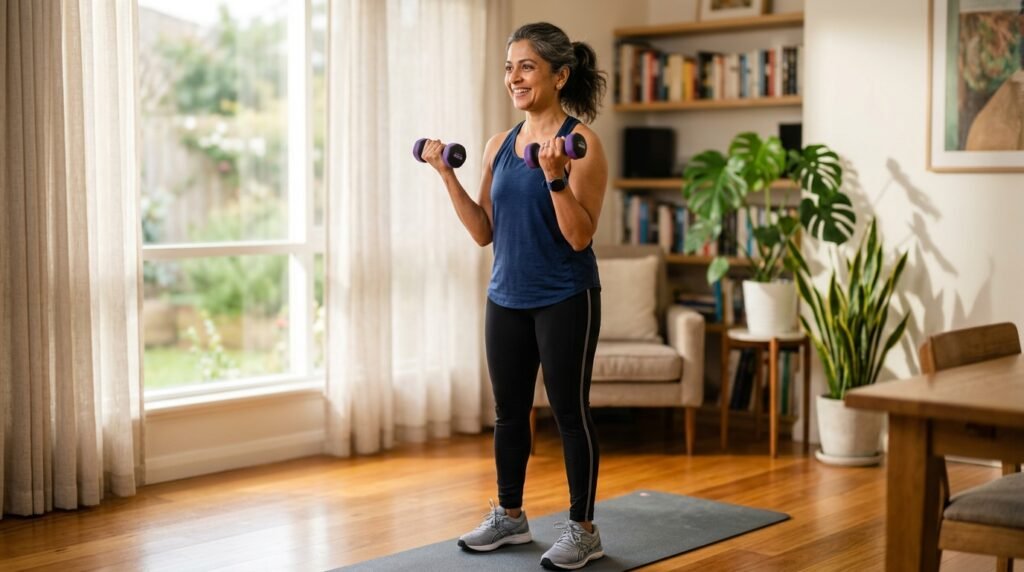
Focus on Compound Movements: Prioritize functional exercises that recruit multiple joints
simultaneously. Excellent examples include bodyweight squats, modified push-ups, glute
bridges, and light dumbbell rows. These movement patterns directly mimic real-life activities.
Frequency Matters: You do not need to live in the gym. Committing to just 2 to 3 days per
week of structured resistance training is highly sufficient to stimulate muscle protein
synthesis and maintain robust bone density.
Perfect Form Over Heavy Weight: The ego is the biggest enemy of longevity. Always select a
weight where you can flawlessly control both the lifting phase and the lowering phase. If your
form breaks down on the final reps, the weight is simply too heavy.
“We don’t stop moving because we grow old; we grow old because we stop moving.” – Age is
merely a number, but functional mobility dictates the quality of your life.
Pillar 2: Proactive Mobility and Joint Flexibility
Flexibility is static, but mobility is dynamic. Mobility is your body’s foundational ability to
actively move a joint through its entire intended range of motion comfortably and completely
pain-free. As we age, muscles naturally tighten, and tendons stiffen up significantly. Dedicating
time to joint mobility ensures you avoid that stiff, achy feeling when getting out of bed in the
morning.
Incorporate dedicated dynamic warm-ups before every single workout. Movement patterns like
gentle arm circles, cat-cow stretches, thoracic spine rotations, and basic hip openers work
wonders to safely lubricate the joints before applying any external stress.
Pillar 3: Low-Impact Cardio for Heart Health
Your heart is a muscle, and it demands consistent conditioning. However, pounding away on
hard asphalt with long-distance running can be incredibly brutal on aging knees and lower
backs. Instead, pivot your strategy toward highly effective low-impact cardiovascular activities.
Brisk walking, cycling, swimming, or using an elliptical trainer provide profound aerobic
benefits while keeping joint stress exceptionally low.
A Safe, Actionable Sample Weekly Routine
Here is a balanced, highly sustainable sample weekly layout designed explicitly for beginners
over 40 or seniors looking for a safe entry point into structured fitness:
Monday: Full-Body Strength Training (30–45 Mins)
- Assisted Bodyweight Squats (or Chair Squats): 3 sets of 10–12 reps.
- Incline Wall or Countertop Push-ups: 3 sets of 10 reps.
- Seated Resistance Band Rows: 3 sets of 12 reps.
- Glute Bridges: 2 sets of 12 reps.
- Tuesday: Low-Impact Recovery & Mobility (30 Mins)
- A brisk, continuous 30-minute outdoor walk paired with 10 minutes of full-body dynamic
stretching. - Wednesday: Active Rest or Rest Day
- Light casual walking, gentle gardening, or absolute rest to allow your nervous system to fully
recover.
Thursday: Full-Body Strength Training (30–45 Mins)
- Step-ups (using a low, stable step): 3 sets of 10 reps per leg.
- Dumbbell Overhead Press (Seated for spinal support): 3 sets of 10 reps with light weight.
- Bird-Dog Exercise: 3 sets of 8 reps per side (excellent for core stability).
- Planks (Modified on knees or elevated incline): 3 sets of 20–30 second holds.
- Friday: Low-Impact Cardio (30–45 Mins)
- Swimming, stationary cycling, or an extended outdoor walk at a moderate, conversational
pace. - Saturday & Sunday: Rejuvenation & Rest
- Focus heavily on deep hydration, proper nutrition, and light stretching to prepare for the
upcoming week.
Crucial Rules for Injury Prevention and Long-Term Success
To ensure you stay completely consistent and entirely injury-free, write these rules down and
treat them as your ultimate fitness commandments:
1- Never Skip the Warm-Up: A cold muscle is highly brittle and incredibly prone to tearing.
Always spend at least 5 to 10 minutes gently raising your core temperature and increasing
localized blood flow before lifting a single weight.
2- Prioritize Sleep and Premium Recovery: Your body does not grow stronger while you are
working out; it grows stronger while you are resting and sleeping. Older adults generally
require slightly longer recovery windows between intense sessions. Prioritize 7 to 8 hours of
deep, high-quality sleep.
3- Listen Intently to Your Body: Learn to clearly distinguish between the healthy, satisfying
burn of a working muscle and the sharp, sudden, localized warning pain of an irritated joint
or tendon. If an exercise hurts your joints, stop immediately and seek an alternative variation.
Conclusion: Your Fitness Journey Starts Today
Fitness after 40 is not a brief, restrictive 12-week challenge designed to burn you out. It is a
beautiful, lifelong commitment to respecting, nurturing, and strengthening the only true home
you will ever have: your body. By shifting your primary focus to consistent strength training,
functional mobility, and smart recovery, you can effectively reverse the biological clock and
enjoy a vibrant, active, and fully independent life for decades to come.
Remember, it is never too late to start, and you are never too old to get stronger. Take that first
small step today—your future self will thank you endlessly.